
Screen Time in the Digital Age: A Pediatrician's Guide for Parents
If you've felt confused about screen time advice lately, you're not alone. For years, the guidance was simple, if rigid: two hours a day, no more. But the American Academy of Pediatrics has shifted its thinking, moving away from a one-size-fits-all time limit and toward a more nuanced question: is this screen time helping or getting in the way of what your child actually needs to thrive?
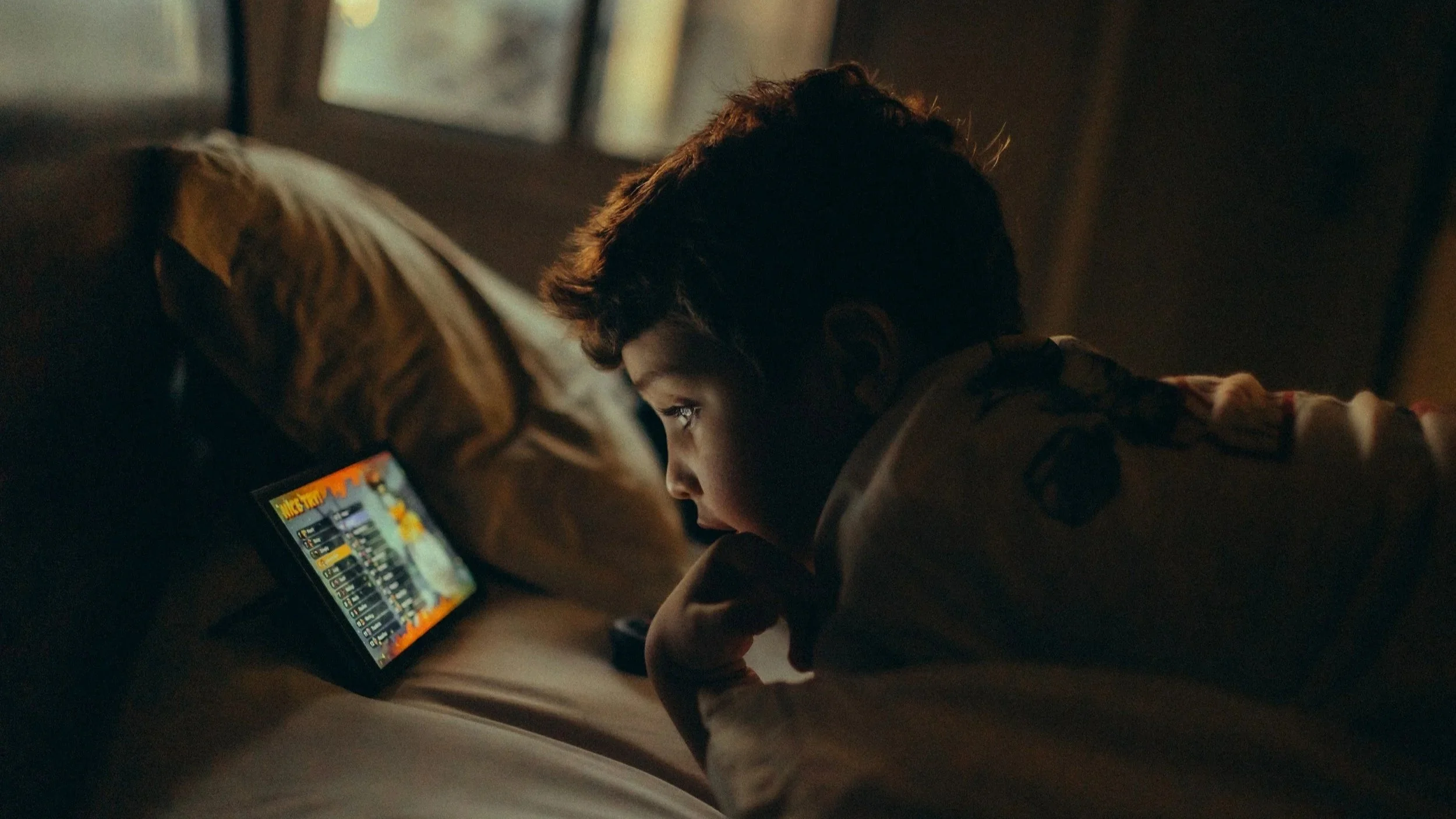
As a pediatrician, I find this shift refreshing and, honestly, more useful for real family life. Here's how to think about screens in your household without the guilt or the guesswork.
Why the Old Rules Changed
A strict hourly cap treated all screen time the same, whether a child was video-chatting with grandparents, watching a violent show alone at midnight, or doing homework research. In reality, context matters just as much as the clock. The updated approach asks parents to look at what's being watched, who it's with, and what it's replacing — not just how many minutes have ticked by.
The "5 Cs" Framework
Pediatricians now encourage families to think through five questions when it comes to media use:
Child: Is this content and amount of use appropriate for my child's age, temperament, and individual needs? A sensitive child and a laid-back sibling may need different approaches even in the same household.
Content: Is what they're watching or playing high-quality, age-appropriate, and something you'd be comfortable knowing about? Educational, well-designed content is very different from fast-paced, ad-driven content built to maximize watch time.
Calm: Does screen use help your child regulate their emotions, or does it tend to escalate meltdowns, especially around transitions like turning off a device?
Crowding out: This is often the most important question. Is screen time displacing sleep, physical activity, face-to-face play, reading, or family time? If screens are pushing out those essentials, that's a sign to scale back, regardless of the specific hour count.
Communication: Are you talking with your child about what they watch and play, rather than just monitoring or restricting? Co-viewing and conversation help kids build the media literacy they'll need for life.
General Benchmarks by Age
While there's no longer a rigid universal cap, some helpful reference points still apply:
Before 18 months, avoid screens altogether except for video chatting with family — this is one of the few areas where the guidance remains firm, since infants learn best through in-person interaction.
Between 18 and 24 months, if you do introduce screens, stick to high-quality educational programming and watch together so you can help your child understand what they're seeing.
For ages 2 to 5, aim for around one hour a day of high-quality content, ideally co-viewed.
For ages 6 to 12, roughly two hours of recreational screen time is a reasonable general guideline, though this flexes based on homework, activities, and what else is going on that day.
For teenagers, rather than a fixed number, work with your teen to build a family media plan that reflects their responsibilities, sleep needs, and mental health — a collaborative approach tends to work far better than a top-down rule at this age.
Practical Strategies That Actually Work
A few habits make the biggest difference in most households, regardless of your child's age. Keep bedrooms device-free, especially at night — devices in the bedroom are strongly linked to poor sleep, and poor sleep affects mood, attention, and growth. Keep meals screen-free, since shared meals are one of the most protective family rituals for kids' emotional development. Create tech-free zones or times, like the first hour after school or the last hour before bed, to help your child decompress and reconnect. Model the behavior you want to see, since kids notice when parents are glued to their own phones — a family media plan works best when it applies to everyone, not just the kids. And keep talking with your child about their favorite shows, games, and apps; that ongoing conversation matters more than any parental control setting.
When to Be More Concerned
Most screen use falls into a normal, manageable range, but a few signs suggest it's worth a closer look or a conversation with your pediatrician: your child becomes distressed or aggressive when screens are taken away, screen use is displacing sleep or in-person friendships, grades or attention at school are slipping alongside increased screen use, or your child seems to be using screens to avoid difficult emotions rather than to relax or connect.
The Bottom Line
Screens aren't inherently good or bad — what matters is how they fit into the bigger picture of your child's day: their sleep, their play, their relationships, and their overall well-being. Rather than counting minutes, ask whether screen time is adding to your child's life or crowding something important out. If you're ever unsure how screens are affecting your specific child, we're always happy to talk it through at their next visit.